


Te Whiti-o-Rongomai
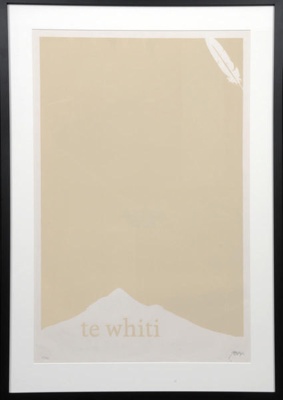
‘The white man in his covetousness ordered me to move on instead of removing himself from my presence. I resisted; I resist to this day’… suddenly he (Te Whiti) pointed to the mountain. ‘Ask that mountain,’ he said, ‘Taranaki saw it all!’ — ‘Ask that Mountain: The Story of Parihaka’ by Dick Scott. Raupo, 2008, p.186–187.
Erueti Te Whiti-o-Rongomai III (died 1907) was born into Te Āti Awa, a Taranaki iwi, during the turmoil of the 'Musket Wars'.
It is said he was identified as a teacher and prophet early in life, and much care was taken to ensure his safety. His stature in the Māori traditional world was augmented by a deep knowledge of Christian doctrine.
Te Whiti was said to have taken part in the Taranaki wars of the 1860s, but by the mid-1860s he had decided to pursue peaceful resistance to European incursion and the loss of land.
One tradition has it that Te Whiti and his people first moved to the inland village later known as Parihaka in the 1840s, to escape the social and economic pressures of coastal life. Other sources say he began living there in the 1860s after the Taranaki wars and subsequent land confiscations. In any event Parihaka became a centre of peaceful resistance and a rallying point for many Māori. Parihaka was led by Te Whiti and his relative and fellow prophet Tohu Kākahi. The main focus of Māori discontent was land confiscation and the government's failure to set aside promised reserves.
On 5 November 1881 a force of almost 1600 volunteers and Constabulary Field Force troops, led by Native Minister John Bryce, invaded Parihaka. The Māori inhabitants, numbering about 2,000, put up no resistance. Instead they greeted Bryce and his men with bread and song. They were dispersed and Te Whiti and Tohu were arrested. The soldiers then systematically wrecked the settlement, and Māori tradition speaks of brutality and rape.
Te Whiti was charged with 'wickedly, maliciously, and seditiously contriving and intending to disturb the peace'. Held without trial, he was not released until 1883, when he returned to the ruined Parihaka settlement. Te Whiti and Tohu continued to lead peaceful Māori protest, and Te Whiti was imprisoned again for six months in 1886. In 1892 the West Coast Settlement Reserves Act brought in a system of renewable leases to settlers on more than 200,000 acres of Māori land. In response, Māori persisted with ploughing campaigns. In 1897, 92 Māori were arrested for ploughing in protest at delays in resolving the grievances over the Native Trustee's management of these leases.
Te Whiti and Tohu died within a few months of each other in 1907. The white albatross feather, which Te Whiti’s followers adopted as a symbol protecting the mana of the Parihaka settlement, remains an enduring emblem among Te Āti Awa.